The Human Side of Artificial Intelligence in Healthcare
Quand l’intelligence artificielle rencontre l’humain en santé
Join us for a scientific event exploring the powerful intersection of artificial intelligence and health, bringing together three leading experts representing France, Belgium, and Québec. Each of them will offer a short presentation to share their unique perspective on this topic and set the stage for a rich and informed panel discussion. Moderated by Pascal Van Hentenryck, the conversation will dive into the evolution of AI through the lens of neurology, unpack how AI models are built for healthcare applications, and spark thoughtful reflection on AI, intelligence, and consciousness. The session will conclude with an interactive Q&A (in French and English), inviting the audience to challenge ideas, ask bold questions, and join the debate shaping the future of health innovation.
PLEASE NOTE THE PRESENTATIONS WILL BE IN FRENCH.
Although scientific in its nature, this event is open and accessible to all, regardless of your knowledge on the topic.
DISCOVER OUR PANELISTS
-
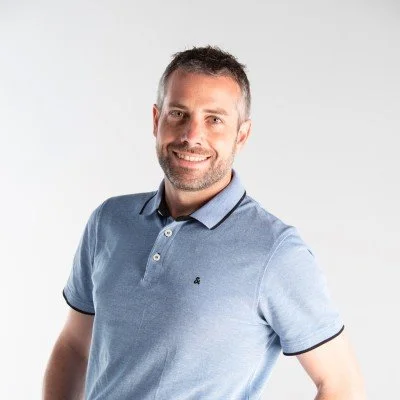
Professor Schaus obtained his Master in Engineering (Computer Science) from UCLouvain in 2005. He then obtained his Ph.D. in Computer Science from UCLouvain in 2009 under the supervision of Yves Deville, with a dissertation focused on balancing and fairness global constraints in Constraint Programming, as well as on Bin Packing. During his doctoral work, he also had the opportunity to collaborate with Jean-Charles Régin and his colleague Pierre Dupont. After completing his Ph.D., he spent five months at Brown University (US), working with Pascal Van Hentenryck on the CP solver of Comet, which Pascal developed jointly with Laurent Michel. He subsequently joined Dynadec, the startup created by Pascal Van Hentenryck to commercialize Comet, where he worked for two years. He then spent two years at the UCLouvain spin-off N‑SIDE, where he initiated the development of the OscaR solver, before returning to UCLouvain as faculty in 2012. He continued leading the development of the CP solver of OscaR until its retirement, after which it was succeeded by MiniCP and MaxiCP, which he actively maintains.
In recent years, his research has increasingly focused on decision‑diagram‑based optimization, a topic pioneered by Willem‑Jan van Hoeve and John Hooker’s team. In collaboration with Cetic, he is now developing DDOLib, a solver built around these techniques. He also had a very fruitful collaboration with his former colleague Siegfried Nijssen in recent years on algorithms for learning exact or less‑greedy decision trees, during which they extended and exploited an idea originally developed by Nijssen and Lisa Fromont (the DL8 algorithm) involving dynamic programming.
Over the years, he has also worked on numerous industrial optimization and machine‑learning applications (scheduling, routing, configuration, etc.) across a variety of projects.
-
Quand l’IA rencontre la médecine : Applications, défis et recherche à l’UCLouvain
L’intelligence artificielle transforme la pratique médicale.
Cette présentation propose un échantillon des applications concrètes de l’IA en médecine.
Nous commencerons par illustrer l’aide au diagnostic basé sur les modèles de langage.
Nous explorerons ensuite d’abord comment les algorithmes de deep learning permettant une détection précoce et plus précise de pathologies, parfois bien avant les premiers symptômes. La découverte accélérée de médicaments illustrera aussi le potentiel futur de l’IA pour réduire les délais de développement thérapeutique. Au-delà de l’enthousiasme technologique, nous discuterons des défis éthiques et pratiques majeurs : biais algorithmiques, interprétabilité des décisions, protection de la vie privée et cadre légal. Nous soulignerons que l’IA doit être comprise comme un outil d’assistance au clinicien, non comme un substitut au jugement médical humain. Enfin, nous mettrons en lumière quelques recherches menées à l’UCLouvain dans ce domaine, notamment en imagerie médicale, apprentissage automatique et bio-informatique contribuant à façonner l’avenir de la médecine assistée par IA.
-
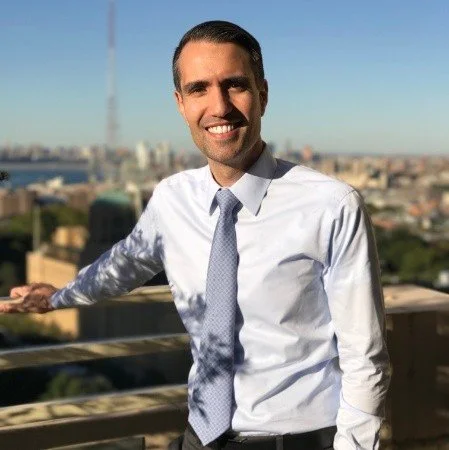
Dr. Julien Cavanagh is an Assistant Professor of Neurology and the Associate Division Director of Hospital Neurology at Emory University. A native of the Loire Valley, Dr. Cavanagh’s career represents a bridge between European clinical tradition and American medical innovation. He began his medical education at the University of Paris and completed a residency in Psychiatry at Jules Verne University. Before moving to the United States, he served as an attending physician at Sainte-Anne Hospital in Paris.
In the U.S., Dr. Cavanagh completed a residency in Neurology at the State University of New York (SUNY), followed by a fellowship in Advanced General and Autoimmune Neurology at Harvard Medical School. Combining deep clinical expertise with a focus on future technologies, he recently completed the Harvard Medical School Certification in Artificial Intelligence in Healthcare. His current work explores the intersection of systems-based care, neurology, and applied machine learning.
A prominent figure in global Francophone media, Dr. Cavanagh is a regular contributor to La Presse—Canada’s most read French-language newspaper—and serves as a medical correspondent for major networks including CBC-Radio-Canada, BFM TV, TVA, and i24news. His unique background at the crossroads of psychiatry and neurology, spanning several academic institutions in both France and the U.S., allows him to offer rare insights into the high-stakes evolution of AI and the neurobiological foundations of consciousness.
-
“De la fonction à la conscience : une Histoire neurologique de l’IA.” (From function to consciousness: a neurological history of AI.)
Let’s trace the fascinating dialogue between neuroscience and artificial intelligence. By exploring how discoveries about the brain inspired the earliest functional models of AI—and how modern neurology continues to shape debates on learning, intelligence, and the possibility of machine consciousness—the presentation highlights the convergences, divergences, and unanswered questions that define this evolving field. It invites the audience to see AI not only as a technological achievement, but also as a reflection of our ongoing quest to understand the mind itself.
-
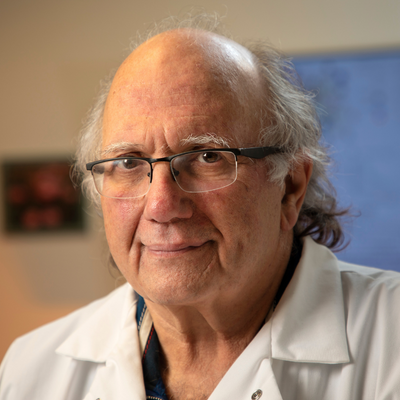
Rafick-Pierre Sékaly, PhD, is a professor and serves as vice-chair of translational medicine in the Department of Pathology and Laboratory Medicine at Emory University School of Medicine in Atlanta, Georgia. Dr. Sékaly is a Georgia Research Alliance Eminent Scholar. He is a member of the Cancer Immunology Research Program at Winship Cancer Institute.
Dr Sékaly obtained his PhD in Biochemistry from the Université de Lausanne in Switzerland where he also completed a postdoctoral fellowship on immunogenetics and molecular biology.
Dr. Sékaly has published more than 340 peer-reviewed articles in scientific journals and holds 25 patents in adjuvants, PD-1 and vaccine vectors.
Dr. Sékaly is an inductee of the MilliPub Club, which recognizes current Emory faculty who have published one or more individual papers throughout their careers that have garnered more than 1,000 citations. -
“L’intelligence artificielle pour améliorer les traitements des maladies infectieuses” (Artificial intelligence to improve the treatment of infectious diseases)
Exploring how advances in artificial intelligence are reshaping the way we understand, diagnose, and treat infectious diseases. By examining how machine learning models can detect patterns invisible to clinicians, accelerate drug discovery, and support realtime decisionmaking during outbreaks, the presentation highlights the transformative potential of AI across the entire care pathway. It also raises essential questions about data quality, clinical integration, and the ethical use of predictive tools in global health. A forward looking reflection on how intelligent systems can strengthen our response to some of the world’s most persistent health challenges.
OUR MODERATOR
-
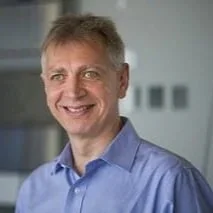
Pascal Van Hentenryck is the A. Russell Chandler III Chair and Professor at Georgia Tech., the director of the NSF Artificial Intelligence Institute for Advances in Optimization (AI4OPT), and the director of Tech-AI, the AI hub at Georgia Tech. Van Hentenryck’s research focuses on artificial intelligence for engineering and science and, in particular, energy, supply chains and manufacturing, transportation, and health care. Earlier in his career, Van Hentenryck designed and implemented several widely used optimization systems, including the constraint programming language CHIP (the foundation of modern constraint-programming systems) and the modeling language OPL (now an IBM product).
You are invited to enjoy a light buffet following the event.
This event is made possible by the Office for Science and Technology of the Consulate General of France in Atlanta, the Consulate General of the Kingdom of Belgium in Atlanta, the Quebec Government Office in Atlanta, Emory University, Georgia Institute of Technology, UCLouvain, and hosted by the Alliance Française of Atlanta